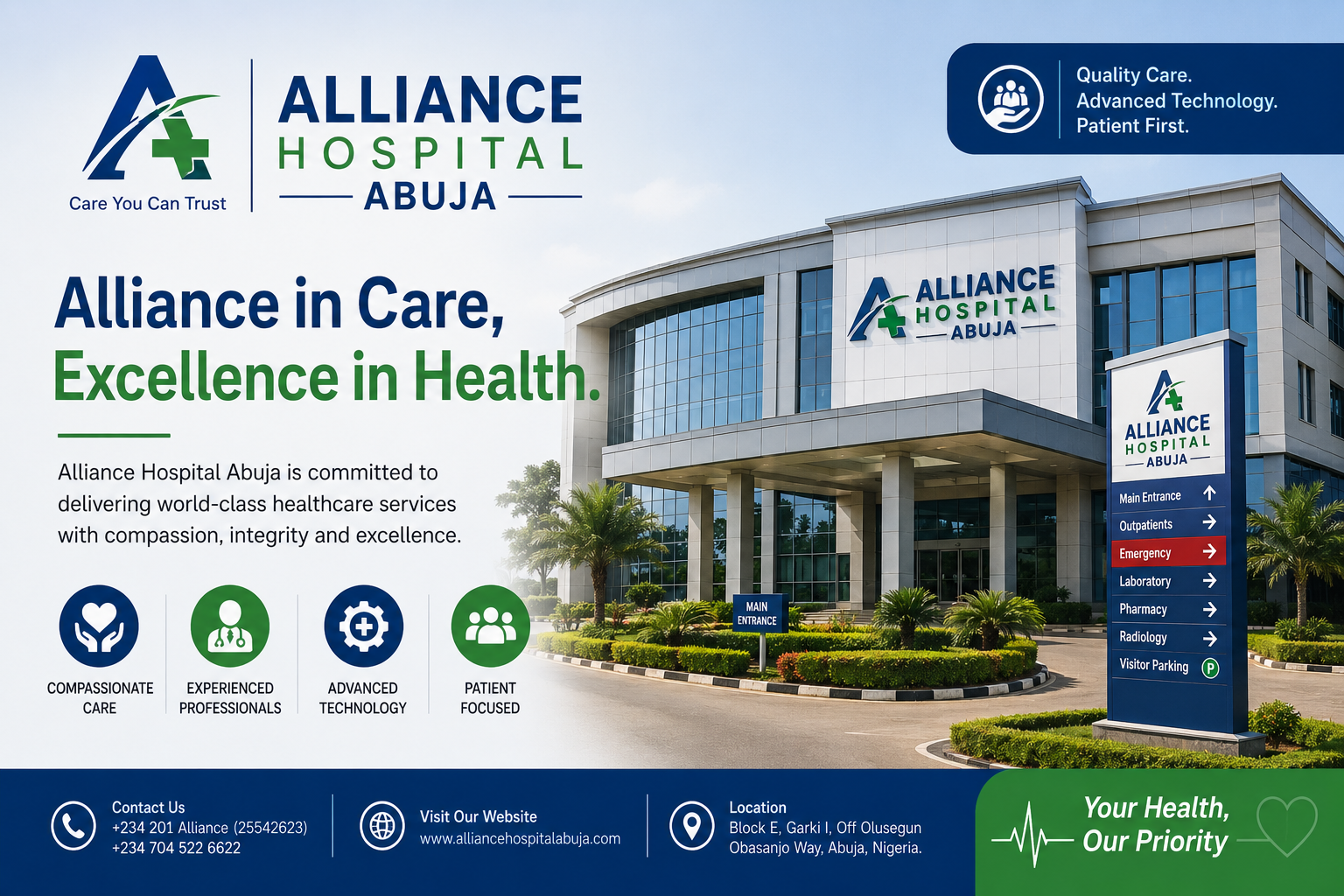
When it comes to quality private healthcare in Nigeria’s Federal Capital Territory, Alliance Hospital Abuja is one of the names that consistently comes up — and for good reason. Whether you are a resident of Abuja looking for a reliable hospital for routine care, a patient requiring specialist consultation, a medical student seeking clinical training opportunities, or a graduate doctor looking for internship and residency pathways, this guide covers everything you need to know about Alliance Hospital Abuja.
From the medical services and specialist departments available at the facility, to its location, contact details, teaching practice opportunities, medical internship programme, and residency training — this article gives you a complete, honest picture of what Alliance Hospital Abuja offers for both patients and medical professionals at every stage of their career.
About Alliance Hospital Abuja
Background and History
Alliance Hospital is one of Abuja’s foremost private tertiary hospitals — a multi-specialist facility that has served the Federal Capital Territory’s growing population for many years. Located in the heart of Abuja, the hospital has built a reputation for providing a standard of medical care that combines modern diagnostic technology, experienced medical specialists, and a patient-centred approach to healthcare delivery that sets it apart from many other private facilities in the FCT.
The hospital was established with a clear mission: to bridge the gap between the quality of healthcare available in Nigeria and the international standard that patients deserve. Over the years, it has grown significantly — expanding its specialist departments, upgrading its diagnostic equipment, and building a medical team that includes some of the most experienced consultants and specialists in the FCT. For many Abuja residents, Alliance Hospital represents a healthcare option that reduces the need to travel abroad for medical attention — offering international-standard diagnostics and specialist care within Nigeria’s capital city.
Accreditation and Standards
Alliance Hospital Abuja operates in compliance with the standards set by the Federal Ministry of Health and relevant Nigerian medical regulatory bodies. Its medical practitioners are registered with the Medical and Dental Council of Nigeria (MDCN) and other relevant professional councils depending on their specialisation. The hospital’s pharmacy operates under the supervision of registered pharmacists in compliance with the Pharmacists Council of Nigeria (PCN) regulations. These accreditations and regulatory compliance measures provide patients with the assurance that the care they receive meets Nigerian professional standards.
Location of Alliance Hospital Abuja
Where Is Alliance Hospital Located?
Alliance Hospital is located in Maitama, Abuja — one of the FCT’s most prestigious and centrally accessible districts. Maitama is home to several of Abuja’s embassies, government ministries, and upscale residential areas, and its central location within the FCT makes Alliance Hospital accessible from most parts of Abuja — including Wuse, Garki, Asokoro, Central Business District, Gwarinpa, and the surrounding satellite towns — within a reasonable commute.
The hospital’s Maitama address places it in one of Abuja’s most well-serviced areas in terms of road infrastructure — making it accessible by private vehicle, ride-hailing services like Bolt and InDrive, and taxis. For patients travelling from outside Abuja — from Nasarawa State, Niger State, or other neighbouring states — the hospital’s location in central Abuja is reasonably accessible from the major interstate road routes entering the FCT.
How to Get to Alliance Hospital Abuja
From the Abuja city centre and Central Business District, Alliance Hospital in Maitama is approximately ten to fifteen minutes by road under normal traffic conditions. From Wuse 2, the journey is typically under ten minutes. From Gwarinpa and the northern districts of Abuja, expect approximately twenty to thirty minutes depending on traffic. From the Nnamdi Azikiwe International Airport, the hospital is approximately thirty to forty-five minutes by road.
When travelling to Alliance Hospital for the first time, it is advisable to confirm the exact address and use a navigation app — Google Maps and Apple Maps both have the hospital listed and provide accurate turn-by-turn directions. Alternatively, call the hospital’s contact line before setting out and ask the front desk team for specific directions from your starting point — particularly useful if you are travelling from an unfamiliar part of Abuja or arriving from out of town.
Medical Services Offered at Alliance Hospital Abuja
One of Alliance Hospital Abuja’s most significant strengths is the breadth of medical services available under one roof. Rather than requiring patients to visit multiple facilities for different aspects of their care, the hospital’s multi-specialist structure allows for comprehensive diagnosis, treatment, and follow-up within a single coordinated care environment. The following sections cover the primary services and specialist departments available at the facility.
Emergency and Accident Services
Alliance Hospital Abuja operates an emergency and accident unit that is available to handle medical emergencies at any time. The emergency unit is equipped to manage acute medical conditions, trauma cases, cardiac emergencies, and other urgent situations that require immediate medical attention. Patients arriving at the emergency unit are triaged based on the severity of their condition, and the most critical cases receive priority attention from the on-duty medical team.
For patients experiencing a medical emergency, Alliance Hospital’s emergency unit provides an important private-sector option in Abuja — particularly for patients who prefer the environment and response times of a private facility or who have health insurance that covers private emergency care. The unit is staffed around the clock, and the hospital’s in-house specialist coverage means that complex emergency cases can be escalated to the appropriate specialist without requiring transfer to another facility in many situations.
General Medicine and Outpatient Services
The general medicine department at Alliance Hospital handles a wide range of non-specialist medical consultations — routine check-ups, management of chronic conditions like hypertension and diabetes, infectious disease consultations, and the initial evaluation of symptoms that may require specialist referral. The outpatient department is the entry point for most non-emergency patients and operates on both appointment and walk-in bases.
General practice consultations at Alliance Hospital are conducted by experienced medical officers and consultants who provide thorough evaluations and evidence-based treatment plans. For patients managing long-term conditions, the hospital’s continuity of care model — where the same physician follows a patient across multiple visits — supports more personalised and effective management than the fragmented care that patients sometimes receive at busier public facilities.
Cardiology
Cardiovascular disease is among the leading causes of morbidity and mortality in Nigeria, and Alliance Hospital Abuja’s cardiology department addresses this with a range of diagnostic and management services for heart and vascular conditions. The cardiology unit is equipped with electrocardiogram (ECG) machines, echocardiography (cardiac ultrasound) facilities, and the monitoring equipment needed for comprehensive cardiac evaluation.
Cardiologist consultations at Alliance Hospital cover the diagnosis and management of conditions including hypertension, coronary artery disease, heart failure, arrhythmias, and valvular heart disease. The department works closely with the hospital’s diagnostic imaging unit to provide comprehensive cardiac imaging as part of the diagnostic workup. Patients with complex cardiac conditions requiring interventional procedures may be referred to appropriate specialist centres where necessary, but a significant range of cardiac management can be handled within the hospital.
Obstetrics and Gynaecology
The Obstetrics and Gynaecology department is one of Alliance Hospital’s busiest and most well-regarded units. It provides comprehensive care for women across the reproductive health spectrum — from antenatal care through labour, delivery, and postnatal care, to the diagnosis and management of gynaecological conditions including fibroids, ovarian cysts, endometriosis, and cervical conditions.
Antenatal care at Alliance Hospital follows evidence-based protocols — regular check-ups, ultrasound scans, blood tests, and specialist consultations are coordinated through the antenatal clinic. The labour and delivery unit is staffed by experienced midwives and obstetricians, and the hospital’s theatre facilities support both normal deliveries and caesarean sections where clinically indicated. Postnatal care — for both mother and newborn — is provided through the postnatal clinic and the neonatal care unit for newborns requiring additional support after birth.
Paediatrics
The Paediatrics department at Alliance Hospital provides medical care for children from newborn through adolescence. Paediatric consultations cover routine child health checks and immunisations, the diagnosis and treatment of common childhood illnesses, management of chronic paediatric conditions, and referral for specialist paediatric services where required. The department’s child-friendly environment is designed to make healthcare visits less intimidating for younger patients — an important consideration for children who may associate medical facilities with anxiety.
The neonatal unit provides care for newborns who require medical attention after birth — premature infants, low-birth-weight babies, and newborns with conditions requiring observation and treatment. The unit is equipped with incubators and the monitoring equipment necessary for neonatal care, and is staffed by paediatricians and neonatal nurses experienced in the management of vulnerable newborns.
Surgery
Alliance Hospital Abuja has fully equipped surgical theatres and a surgical team capable of performing a range of elective and emergency surgical procedures. General surgical procedures — appendectomies, hernia repairs, cholecystectomies, and similar common surgeries — are performed regularly. The hospital also offers orthopaedic surgical procedures, gynaecological surgeries, and urological surgeries within its surgical capability.
Pre-operative assessment, anaesthesia services, post-operative care, and surgical follow-up are all provided within the hospital — giving patients the continuity of care that complex surgical management requires. The hospital’s sterile processing and infection control standards in the surgical theatres meet the requirements expected of a private tertiary facility.
Radiology and Diagnostic Imaging
Accurate diagnosis is the foundation of effective treatment, and Alliance Hospital Abuja’s radiology and diagnostic imaging department provides a comprehensive range of imaging services to support clinical decision-making across all specialist departments. Imaging services available include plain X-ray, ultrasound scanning, CT (computed tomography) scanning, and MRI (magnetic resonance imaging) — covering the full spectrum of diagnostic imaging needs from routine to complex.
The radiology department is staffed by trained radiologists and radiographers who produce high-quality images and provide detailed reports to the referring clinicians. Turnaround times for imaging results are generally faster at Alliance Hospital than at many public facilities — an important practical advantage for patients who need results quickly to inform treatment decisions.
Laboratory and Pathology Services
The hospital’s medical laboratory provides a comprehensive range of diagnostic tests — haematology, biochemistry, microbiology, serology, and histopathology — supporting both outpatient and inpatient clinical care. The laboratory is equipped with modern automated analysers that produce accurate results with reasonable turnaround times, and it operates quality control procedures consistent with good laboratory practice standards.
For patients undergoing investigations at Alliance Hospital, the integrated laboratory — where results flow directly to the treating clinician’s patient management system — means that the time between sample collection and clinical action is minimised. This integration is one of the practical advantages of a multi-specialist hospital over fragmented care arrangements where patients collect samples at one facility, process them at another, and carry results back to yet another clinician.
Ophthalmology
The ophthalmology unit at Alliance Hospital provides eye care services including routine eye examinations, prescription of corrective lenses, diagnosis and management of eye conditions including glaucoma, cataracts, diabetic retinopathy, and other ocular diseases. The unit is equipped with slit-lamp biomicroscopy and other standard ophthalmic examination equipment, and surgical eye care — including cataract surgery — is available for patients who require it.
Dentistry
Alliance Hospital’s dental unit offers general and specialist dental care — routine check-ups and cleaning, fillings, extractions, root canal treatment, orthodontic services, and oral surgery. The dental unit is equipped with modern dental chairs, digital X-ray equipment, and the instruments required for comprehensive dental care. Regular dental check-ups — which many Nigerians neglect until dental pain forces the issue — are available at the hospital as part of its preventive health offering.
Physiotherapy and Rehabilitation
The physiotherapy and rehabilitation unit provides therapeutic services for patients recovering from injury, surgery, or medical conditions affecting mobility and physical function. Physiotherapy at Alliance Hospital covers musculoskeletal conditions, post-surgical rehabilitation, neurological rehabilitation, and sports injury management. The unit works closely with the orthopaedic surgery, neurology, and general medicine departments to provide integrated rehabilitation as part of the overall treatment plan for patients requiring it.
Pharmacy
Alliance Hospital operates an in-house pharmacy that dispenses both prescription medications and over-the-counter products. The pharmacy is stocked with a comprehensive range of medications covering the therapeutic areas served by the hospital’s specialist departments. A significant advantage of the in-house pharmacy is the direct communication between the dispensing pharmacists and the treating physicians — reducing the risk of medication errors and ensuring that patients receive the correct medications at the correct doses and frequencies.
Health Insurance and Payment Options at Alliance Hospital Abuja
Health Insurance Accepted
Alliance Hospital Abuja is accredited by several Health Management Organisations (HMOs) and accepts health insurance from a number of the major HMOs operating in Nigeria. If you have health insurance through your employer or as a personal policy, contact your HMO to confirm whether Alliance Hospital is on their list of accredited providers before scheduling your appointment — this saves you the inconvenience of discovering at the point of service that your insurer does not cover the facility.
For Abuja residents enrolled in the National Health Insurance Authority (NHIA) programme — formerly the National Health Insurance Scheme (NHIS) — it is worth confirming whether Alliance Hospital participates in the NHIA network, as this affects what portion of your care costs will be covered under your insurance plan. HMO accreditation status can change over time, so always verify directly with both the hospital and your insurer rather than relying on outdated information.
Self-Pay Options
Patients who are self-paying — not covered by health insurance — can access Alliance Hospital services on a fee-for-service basis. The hospital’s billing department can provide information on consultation fees, investigation costs, and procedure charges before you commit to a service, allowing you to make an informed decision about your care and budget. Payment is accepted by cash, bank transfer, and debit or credit card at the hospital’s cashier points.
What to Expect When You Visit Alliance Hospital Abuja
Making an Appointment
For non-emergency consultations, making an appointment before visiting Alliance Hospital is strongly recommended. Appointments allow the hospital to schedule your consultation with the appropriate specialist, reduce your waiting time at the facility, and ensure that any pre-consultation preparations — fasting for certain blood tests, for example — are communicated to you in advance. Contact the hospital’s appointment line or front desk to schedule your consultation, specifying the type of specialist or service you require.
What to Bring
When visiting Alliance Hospital Abuja, bring the following: a valid means of identification (national ID, international passport, or driver’s licence); your health insurance card or HMO details if applicable; any previous medical records, investigation results, or specialist reports relevant to your current condition — particularly if you are seeing a specialist for the first time and want to avoid repeating investigations already done elsewhere; and a list of any medications you are currently taking, including dosages. Having this information available makes your consultation more efficient and helps the treating physician make more informed clinical decisions.
Patient Services and Environment
Alliance Hospital Abuja maintains a clean, organised, and professionally managed facility environment. The reception and waiting areas are air-conditioned and comfortable, the consulting rooms are private, and the nursing staff are trained to interact with patients in a courteous and professional manner. Security personnel manage access to the facility, and the general environment reflects the standard expected of a leading private hospital in the FCT.
Contact Information for Alliance Hospital Abuja
For appointments, enquiries, emergencies, or general information about services at Alliance Hospital Abuja, contact the hospital through the following channels. Always verify contact details directly with the hospital as these may be updated periodically.
Address: Alliance Hospital, Maitama, Abuja, Federal Capital Territory, Nigeria.
Phone: Contact the hospital directly through their published phone lines — available on the official Alliance Hospital website and on Google Maps under the hospital listing. It is advisable to call ahead before visiting, particularly for specialist consultations, to confirm appointment availability and any preparation instructions.
Website: Alliance Hospital maintains an official website where current service information, specialist availability, and contact details are published. Search “Alliance Hospital Abuja official website” on Google to access the most current version of the site.
Emergency Line: For medical emergencies, contact the hospital’s emergency line directly or proceed to the emergency unit in person. In life-threatening emergencies, also contact the Federal Capital Territory emergency services.
Alliance Hospital Abuja as a Teaching and Training Institution
The Role of Private Hospitals in Medical Education in Nigeria
In Nigeria’s medical education landscape, teaching hospitals have traditionally been associated exclusively with government-owned tertiary facilities attached to universities — places like the University of College Hospital Ibadan, Lagos University Teaching Hospital, or the National Hospital Abuja. However, the growing sophistication of private hospitals like Alliance Hospital Abuja has expanded the space in which clinical training can meaningfully occur. Private hospitals with strong specialist depth, modern diagnostic equipment, and high patient volumes increasingly serve as valuable training environments for medical students, house officers, and resident doctors — supplementing the overstretched capacity of public teaching hospitals.
Alliance Hospital Abuja participates in this broader clinical education ecosystem by providing structured training opportunities for medical students on rotation, house officers completing their mandatory internship, and in some specialist areas, resident doctors pursuing postgraduate medical training. Understanding what each of these pathways looks like at Alliance Hospital helps medical students and graduate doctors make informed decisions about their clinical training options in the FCT.
Teaching Practice at Alliance Hospital Abuja
Clinical Rotations for Medical Students
Medical students from Nigerian universities — particularly those attached to institutions in and around Abuja — have the opportunity to undertake clinical rotations at Alliance Hospital Abuja as part of their clinical years training. Clinical rotations at a facility like Alliance Hospital expose students to the practical management of a wide range of medical conditions across multiple specialist departments, in an environment that combines high-quality diagnostic infrastructure with experienced consultants willing to teach.
For medical students, the value of a rotation at Alliance Hospital lies in several distinct advantages over rotations at some public facilities. The patient-to-student ratio at a well-managed private hospital tends to be more favourable — meaning students get more direct patient contact, more hands-on procedural experience, and more one-on-one time with supervising consultants than in the sometimes overwhelming volume environment of a large public teaching hospital. The diagnostic equipment is modern and functional — students learn to order and interpret investigations on equipment that actually works, building the practical diagnostic reasoning skills that clinical training is designed to develop.
Departments That Participate in Student Teaching
Clinical teaching at Alliance Hospital Abuja takes place across several of its core departments. In the Obstetrics and Gynaecology department, students participate in antenatal clinics, labour ward management, and theatre exposure for both normal and operative deliveries — building the core obstetric skills that every medical graduate needs regardless of eventual specialisation. In the Paediatrics department, students attend ward rounds, outpatient clinics, and neonatal unit observations that develop their understanding of childhood illness and child health management.
The Internal Medicine and General Medicine departments provide students with exposure to the bread-and-butter presentations of adult medicine — hypertension, diabetes, infections, cardiac conditions, and gastrointestinal diseases — that form the bulk of medical practice in Nigeria. The Surgical department gives students exposure to theatre procedures, wound management, and the clinical assessment of surgical conditions. The Radiology department provides teaching on diagnostic imaging interpretation — a skill increasingly important for modern clinical practice that is often undertaught in purely theoretical settings.
How Medical Students Can Access Rotations at Alliance Hospital
Medical students interested in undertaking a clinical rotation at Alliance Hospital Abuja typically access this opportunity through one of two pathways. The first is through their medical school — where the university’s clinical training coordinator or the dean of clinical studies has a formal arrangement with Alliance Hospital that places students there as part of the official rotation schedule. Students in this pathway are allocated to Alliance Hospital as part of their structured curriculum and receive credit for the rotation through their university.
The second pathway is through a self-arranged elective rotation — where a student independently contacts Alliance Hospital’s medical education or administration department to request a placement during their elective period. Elective rotations are typically available to students in their clinical years who want to supplement their formal curriculum rotations with additional exposure in a specific department or clinical environment. Students pursuing this pathway should contact Alliance Hospital directly, provide a formal letter of introduction from their medical school, and confirm the terms of the placement — duration, department, supervision arrangements, and any applicable fees — before committing.
Medical students from international institutions who are of Nigerian origin or who wish to gain clinical exposure in Nigeria during their elective periods also find Alliance Hospital a viable placement option. The hospital’s Abuja location, modern facilities, and English-language clinical environment make it accessible to internationally trained students seeking a Nigerian clinical experience.
Medical Internship (Housemanship) at Alliance Hospital Abuja
What Is the Medical Internship in Nigeria?
The medical internship — commonly called housemanship in Nigeria — is the mandatory one-year post-graduation clinical training that every Nigerian medical graduate must complete before they can be fully registered with the Medical and Dental Council of Nigeria (MDCN) as an independent practitioner. During housemanship, the graduate doctor — now called a house officer — rotates through a defined set of clinical departments under the supervision of senior medical officers and consultants, gaining the hands-on clinical experience needed to consolidate the knowledge acquired during medical school and develop the independent clinical decision-making skills that full MDCN registration demands.
The housemanship year is divided into rotations — typically six months in Medicine and Surgery at the minimum, with additional rotations in Paediatrics, Obstetrics and Gynaecology, and other departments depending on the accreditation of the specific hospital. House officers are paid a stipend during the internship and are under continuous supervision and assessment throughout the year.
Does Alliance Hospital Abuja Offer Housemanship?
Alliance Hospital Abuja is among the private hospitals in the FCT that have sought and obtained accreditation from the Medical and Dental Council of Nigeria to train house officers. MDCN accreditation for housemanship is not automatic — it requires a formal application, an assessment of the hospital’s clinical infrastructure, patient volume, specialist staff, and educational capacity, and a positive recommendation from the MDCN inspection team. Hospitals that obtain this accreditation have met the MDCN’s minimum standards for clinical training at the internship level.
Medical graduates interested in completing their housemanship at Alliance Hospital should confirm the hospital’s current MDCN accreditation status directly — accreditation status can change between inspection cycles, and it is essential to verify that a hospital is currently accredited before accepting a house officer position there. Completing housemanship at an unaccredited hospital means the year may not be recognised by the MDCN for registration purposes — a serious and entirely avoidable problem.
How to Apply for Housemanship at Alliance Hospital Abuja
The application process for housemanship positions at Alliance Hospital Abuja involves submitting an application to the hospital’s medical director or human resources department. The typical application package includes a formal application letter expressing your interest in the house officer position, your MBBS or BDS certificate or a statement of result from your medical school, your NYSC discharge certificate or evidence of NYSC participation where applicable, your MDCN provisional registration where available, a curriculum vitae, and two or three professional references from your medical school supervisors or consultants.
House officer positions at private hospitals in Abuja are competitive — the FCT’s large population of graduate doctors combined with the relatively limited number of accredited private training positions means that well-prepared, well-referenced applications are essential. Submit your application early — ideally before your final medical school examinations are completed, so that you are positioned for intake at the first available cohort after your graduation and MDCN provisional registration.
What Housemanship at a Private Hospital Like Alliance Looks Like
Housemanship at a private hospital like Alliance Hospital differs from housemanship at a large government teaching hospital in ways that some graduates find advantageous and others find limiting — understanding the differences helps you make an informed choice about where to do your internship.
At a private hospital, the patient-to-house-officer ratio is typically more manageable than at large public teaching hospitals — meaning house officers get meaningful supervised clinical responsibility rather than being part of a large team where individual contribution can be diluted. The consultant supervision at a well-staffed private hospital tends to be more direct and accessible — house officers at Alliance Hospital can typically reach a supervising consultant quickly when they need guidance, which accelerates learning and builds clinical confidence faster than environments where supervision is more distant.
The case mix at a private hospital in Abuja reflects the demographics of its patient population — which tends toward the middle and upper-income FCT resident profile. This means house officers gain strong experience in non-communicable diseases, elective surgical conditions, and the management of well-investigated patients with access to the full range of diagnostics. The trade-off is potentially less exposure to the volume of infectious disease presentations, obstetric emergencies, and resource-constrained management decisions that characterise training at large public hospitals serving broader population demographics. Ideally, house officers benefit from rotating through both types of environment across their internship year — which is possible within the MDCN rotation framework if planned thoughtfully.
Residency Training at Alliance Hospital Abuja
What Is Residency Training in Nigeria?
Residency training — also called postgraduate medical training — is the structured programme through which qualified medical practitioners pursue specialist qualifications in a specific medical discipline. In Nigeria, residency training leads to the Fellowship of the West African College of Physicians (FWACP), the Fellowship of the West African College of Surgeons (FWACS), the Fellowship of the National Postgraduate Medical College of Nigeria (FMCP or FMCS), or equivalent fellowship qualifications in specific disciplines like Obstetrics and Gynaecology, Paediatrics, Radiology, Anaesthesia, and others.
Residency is the most demanding stage of a doctor’s training — typically lasting four to six years depending on the specialty, involving structured clinical training, academic study, research, and progressive assessments leading to the fellowship examination. Resident doctors are called registrars during training and are supervised by consultant fellows in their department.
Residency Opportunities at Alliance Hospital Abuja
Some private hospitals in Nigeria with strong specialist departments and sufficient patient volume apply to the relevant postgraduate medical colleges for accreditation to train resident doctors. Accreditation for residency training is more stringent than for housemanship — it requires a department of sufficient size, a minimum number of consultant fellows as trainers, an adequate case mix and patient volume, library and educational resources, and a demonstrated commitment to the structured educational programme required by the postgraduate college.
Alliance Hospital Abuja, given its multi-specialist structure and experienced consultant team, is among the private FCT hospitals that have pursued or obtained residency training accreditation in select departments. Doctors interested in pursuing residency training at Alliance Hospital should contact the hospital’s medical director or the head of the specific specialty department to enquire about current accreditation status and available registrar positions. Given that residency accreditation status and available positions change as the hospital’s training programme evolves, direct inquiry is essential for the most current and accurate information.
How to Apply for Residency at Alliance Hospital Abuja
Applying for a registrar position at Alliance Hospital requires full MDCN registration — meaning you must have completed your housemanship and obtained full registration with the MDCN before applying. You must also have registered with the relevant postgraduate medical college — either the West African College of Physicians or Surgeons (WACP/WACS) or the National Postgraduate Medical College (NPMCN) — in the specialty you wish to pursue. Registration with the college involves passing the primary fellowship examination, which tests core biomedical science knowledge relevant to your chosen specialty.
The application for a registrar position at Alliance Hospital typically involves a formal application letter, your MDCN full registration certificate, your postgraduate college registration evidence, your curriculum vitae, certificates of any additional training or courses completed, and references from consultants who have supervised your clinical work. Shortlisted applicants are typically invited for an interview with the relevant department head and medical director before a position is offered.
The Value of Residency Training at a Private Hospital
Residency training at a private hospital like Alliance Hospital Abuja offers some distinct advantages alongside the challenges that the private hospital training environment presents. The consultant-to-registrar ratio at a private hospital is typically more favourable than at large public teaching hospitals — meaning registrars at Alliance Hospital receive more direct consultant mentorship and more structured feedback on their clinical development than registrars in large cohorts at government institutions.
The research and academic component of residency training — which is increasingly emphasised by the postgraduate colleges in their fellowship examination requirements — is supported at Alliance Hospital through library access, journal subscriptions, and access to the hospital’s patient data for clinical research projects. Registrars pursuing their fellowship examination preparation at Alliance Hospital benefit from structured teaching sessions organised by the department’s consultants, as well as access to the broader Abuja medical community’s academic activities — journal clubs, grand rounds, and continuing medical education events.
Why Choose Alliance Hospital Abuja
Multi-Specialist Under One Roof
One of the most practical advantages of Alliance Hospital Abuja is the breadth of specialist services available within a single facility. Patients with complex conditions that require input from multiple specialties — a diabetic patient who needs both an endocrinologist and an ophthalmologist, for example, or a cardiac patient who also requires physiotherapy — can access coordinated multi-specialist care at Alliance Hospital without the logistical difficulty of managing appointments at multiple separate facilities across Abuja.
Experienced Medical Team
The hospital’s medical team includes experienced consultants and specialists with training from both Nigerian and international institutions. The combination of locally experienced practitioners who understand the Nigerian disease burden and patient population, alongside specialists with international training exposure, gives Alliance Hospital’s clinical team a breadth of perspective that benefits patient care.
Modern Diagnostic Facilities
Access to modern diagnostic equipment — CT scanning, MRI, echocardiography, automated laboratory analysers — within the same facility where you are receiving clinical care significantly reduces the time between investigation and diagnosis, and between diagnosis and treatment initiation. This integrated diagnostic capability is one of Alliance Hospital’s most clinically significant strengths and one of the primary reasons patients choose the facility over options with less comprehensive diagnostic infrastructure.
Privacy and Environment
For patients who value the privacy, confidentiality, and comfort of a well-managed private facility — particularly for sensitive health conditions or specialist consultations — Alliance Hospital’s environment provides a standard of patient experience that is difficult to replicate in busier public facilities. The consulting rooms are private, the staff are professionally trained, and the overall facility management reflects an understanding of what patients expect from a leading private hospital.
Frequently Asked Questions
Where is Alliance Hospital Abuja located?
Alliance Hospital Abuja is located in Maitama, one of Abuja’s most centrally accessible and prestigious districts. Maitama is easily reachable from most parts of the Federal Capital Territory — including Wuse, Garki, Asokoro, the Central Business District, and Gwarinpa — making the hospital a conveniently located healthcare option for residents across the FCT. Use Google Maps and search “Alliance Hospital Abuja” for precise directions from your location.
What specialist services does Alliance Hospital Abuja offer?
Alliance Hospital Abuja offers a comprehensive range of specialist services including cardiology, obstetrics and gynaecology, paediatrics, surgery, radiology and diagnostic imaging, laboratory services, ophthalmology, dentistry, physiotherapy, and emergency medicine, alongside general medicine and outpatient services. The multi-specialist structure of the hospital allows patients to access a wide range of medical services within a single integrated care environment.
Does Alliance Hospital Abuja accept health insurance?
Alliance Hospital Abuja is accredited by several Health Management Organisations and accepts health insurance from a number of major HMOs operating in Nigeria. Contact your HMO directly to confirm whether Alliance Hospital is on their list of accredited providers before scheduling your appointment. Self-pay patients are also welcome at the hospital on a fee-for-service basis.
Does Alliance Hospital Abuja have an emergency unit?
Yes — Alliance Hospital Abuja operates an emergency and accident unit that is available around the clock for medical emergencies. The unit is equipped to handle acute medical conditions, trauma cases, cardiac emergencies, and other urgent situations. Patients are triaged on arrival based on the severity of their condition, with the most critical cases receiving priority attention.
How do I make an appointment at Alliance Hospital Abuja?
Contact the hospital’s appointment line or front desk by phone to schedule a consultation with the appropriate specialist or service. For non-emergency consultations, booking in advance is strongly recommended to reduce waiting time and ensure the relevant specialist is available on the day of your visit. The hospital’s contact details are available on their official website and through the Google Maps listing for Alliance Hospital Abuja.
Is Alliance Hospital Abuja good for maternity services?
Alliance Hospital Abuja has a well-regarded Obstetrics and Gynaecology department that provides comprehensive maternity services — including antenatal care, labour and delivery, caesarean section where clinically indicated, postnatal care, and neonatal care for newborns requiring additional support. Many Abuja residents choose Alliance Hospital for their maternity care because of the combination of experienced obstetricians, midwives, modern facilities, and the availability of other specialist support within the same facility if needed during or after delivery.
Can medical students do clinical rotations at Alliance Hospital Abuja?
Yes — Alliance Hospital Abuja accepts medical students for clinical rotations, both through formal arrangements with their medical schools and through self-arranged elective placements. Students interested in a rotation should contact the hospital’s administration or medical education department with a formal letter of introduction from their medical school, specifying the department of interest, the desired duration, and their current year of clinical training. International medical students of Nigerian origin seeking clinical exposure in Nigeria during elective periods also find Alliance Hospital a viable option.
Does Alliance Hospital Abuja offer housemanship positions?
Alliance Hospital Abuja has pursued MDCN accreditation to train house officers and offers housemanship positions for qualifying medical graduates. Medical graduates interested in completing their internship at Alliance Hospital should contact the hospital’s medical director or HR department to confirm current accreditation status and available positions. Applications typically require your MBBS certificate or statement of result, MDCN provisional registration, a formal application letter, CV, and professional references. Always verify the hospital’s current MDCN accreditation status before accepting any house officer position.
Does Alliance Hospital Abuja offer residency training?
Alliance Hospital Abuja has pursued residency training accreditation in select specialist departments through the relevant postgraduate medical colleges. Fully registered doctors who have completed housemanship and obtained postgraduate college registration in their chosen specialty should contact the head of the specific department or the medical director directly to enquire about current registrar positions and accreditation status. Residency training at Alliance Hospital offers favourable consultant-to-registrar ratios and structured mentorship alongside the clinical workload of a busy multi-specialist private hospital.
Final Thoughts
Alliance Hospital Abuja occupies an important position in the FCT’s private healthcare landscape — a multi-specialist facility with experienced clinicians, modern diagnostic equipment, and a patient-centred approach that makes it one of the more complete private healthcare options available in Abuja. For residents of the Federal Capital Territory seeking quality private healthcare — whether for a routine consultation, a specialist review, an emergency, or maternity care — Alliance Hospital represents a credible, well-established option worth considering.
As with any healthcare decision, the most important first step is to contact the hospital directly — confirm the availability of the specific service or specialist you need, understand the cost implications, verify your insurance coverage, and make an appointment that gives you access to the right medical professional for your specific needs. Your health is your most important asset. Choose your healthcare provider with the same care and deliberateness you would apply to any other significant decision in your life.
For the most current information on services, specialist availability, fees, and contact details at Alliance Hospital Abuja, visit the official Alliance Hospital website or call the hospital directly. Information in this guide reflects the best available public information at the time of writing and should be verified directly with the hospital before making healthcare decisions.